


The Guru’s Guide to 360 Feedback
A practical guide to 360 feedback that actually drives behavior change
In today’s competitive work environment, personal and professional development are essential for achieving success. One of the most effective tools for fostering growth and enhancing leadership is the 360-degree feedback survey. This comprehensive feedback system provides valuable insights that not only boost employee engagement but also drive continuous improvement across the organization. This guide will walk you through what 360 surveys are, how they work, their value to both individuals and organizations, and how to implement them effectively.
What is a 360-Degree Feedback Survey?
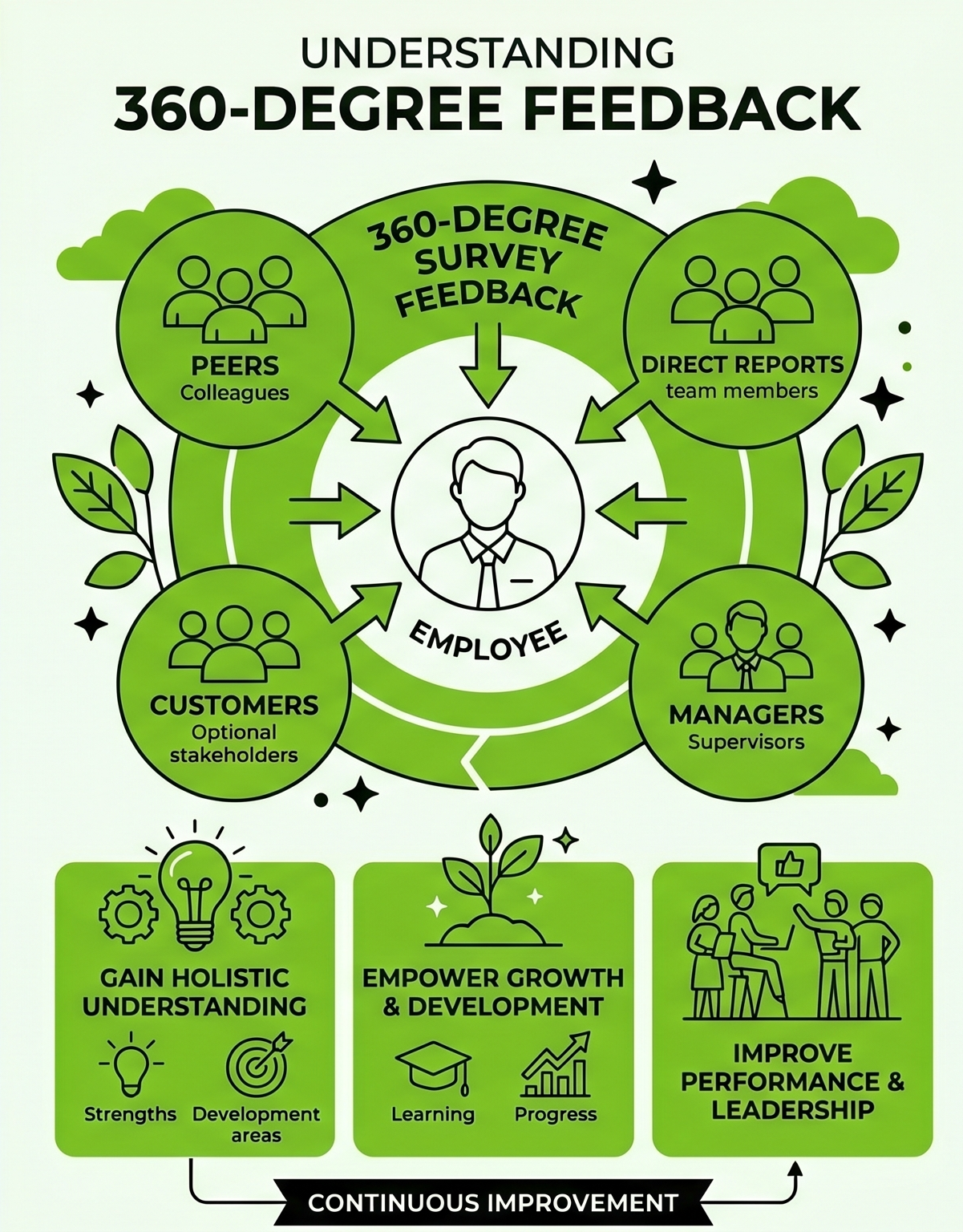
A 360-degree survey is a feedback system where employees receive confidential, anonymous feedback from the people they work closely with. This typically includes managers, peers, direct reports, and occasionally customers. The goal is to gain a well-rounded understanding of an individual’s strengths and development areas. 360-degree feedback empowers employees and leaders alike by uncovering both areas for improvement and existing strengths. This holistic approach fosters a culture of continuous growth and development, leading to improved performance, stronger leadership, and higher employee engagement.
Why is it Called a “360-Degree” Survey?
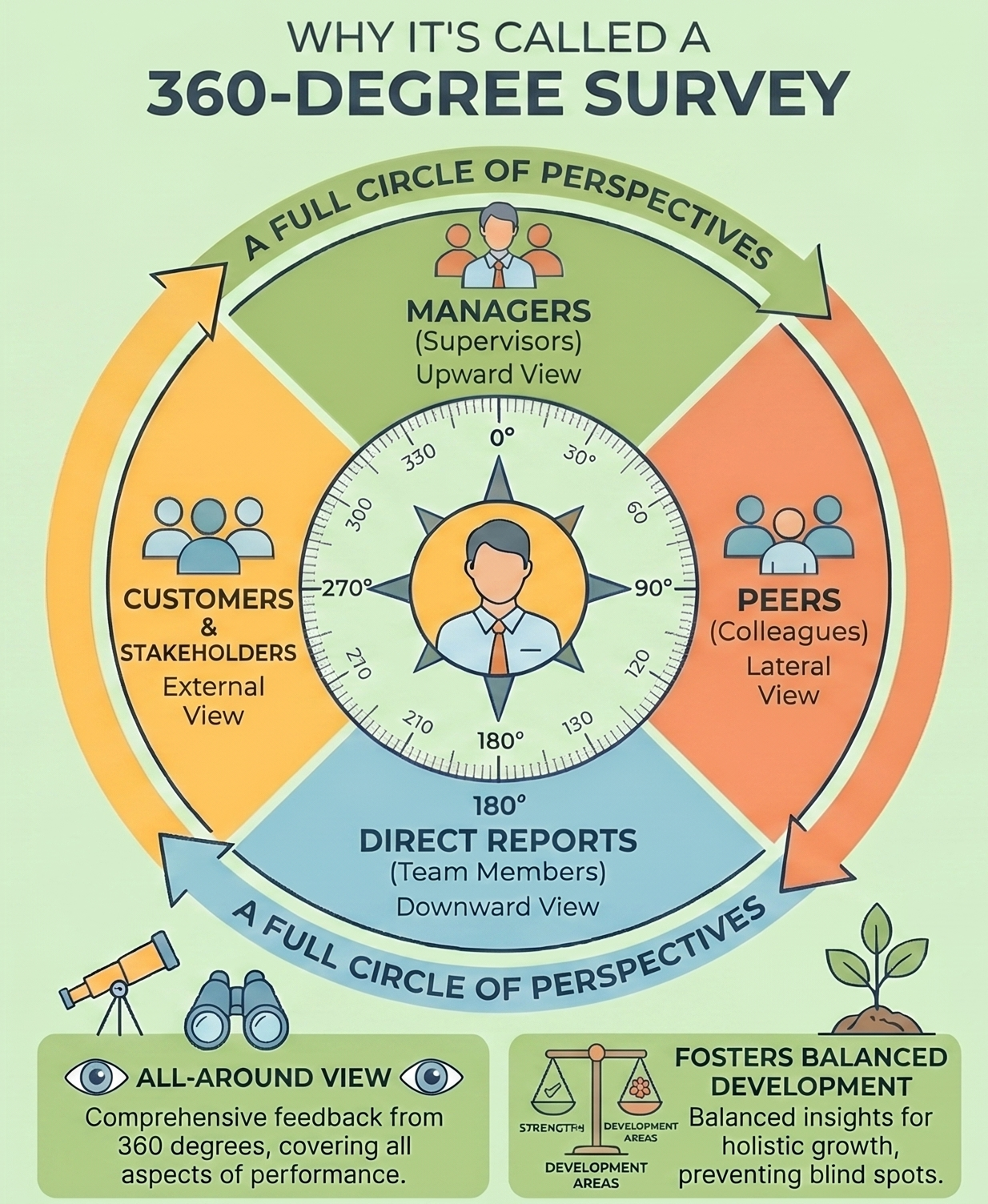
The term “360-degree” refers to the comprehensive nature of the feedback process. Like a full circle, the 360-degree survey gathers feedback from all directions—managers, peers, direct reports, and sometimes external stakeholders—providing a complete view of an individual’s performance and behavior. By incorporating diverse perspectives, this feedback system ensures that no aspect of a participant’s work is overlooked, which helps to foster balanced development.
Want this as a printable guide?
A Brief History of 360-Degree Surveys
The concept of 360-degree feedback surveys originated in the 1950s, initially used in military settings to evaluate performance and leadership. By the 1990s, these surveys became popular in the corporate world, as companies recognized the value of receiving diverse perspectives for employee development and organizational growth. Today, 360-degree surveys are widely used across industries, serving as an effective tool for fostering growth, enhancing self-awareness, and improving team dynamics.
360 Survey Terminology: Terms You Should Know
Understanding the terminology associated with 360 surveys will help you navigate the process effectively:
Participant : The person receiving feedback
Rater : A person who provides feedback in a 360 survey. Raters can include managers, peers, direct reports, and sometimes external stakeholders such as clients or partners
Gap : The difference between the average score from a rater group and the participant’s self-assessment, indicating perception differences
Overall Score : The average of all ratings, excluding self-scores, providing a broader view of the participant’s performance
Strengths : Skills or behaviors that received high ratings from raters, indicating areas where the individual excels
Development Opportunities : Areas that received lower ratings and may need improvement
Hidden Strengths : Skills or attributes that are not fully recognized by the participant but are evident to others
Blind Spots : Behaviors that the individual may not be aware of, which are apparent to others and may need attention
Competencies : The skills, behaviors, and attributes evaluated in a 360 survey, such as leadership, communication, teamwork, and problem-solving
360 Feedback Report : A document that compiles all feedback, including ratings, comments, and visual representations, serving as a foundation for a development plan
Action Plan : A strategy that outlines specific steps for improvement based on the feedback received
Anonymous Feedback Feedback that is provided without revealing the identity of the respondent to encourage honest and candid responses
How Does the 360-Degree Process Work?
A 360 survey involves a systematic process designed to collect and analyze feedback from various perspectives:

Selection of Respondents: Participants choose a diverse group of raters, ensuring feedback covers various aspects of their work. This group may include managers, peers, direct reports, and occasionally clients.

Survey Administration: Raters complete an anonymous survey that evaluates different competencies, such as leadership, communication, teamwork, and problem-solving. The participant also completes a self-assessment.

Feedback Collection: Feedback is collected anonymously to encourage honest responses. Respondents rate the participant on a scale and may provide written comments for additional context.

Report Generation: The collected feedback is compiled into a report, highlighting strengths, areas for improvement, blind spots, and recurring themes. Visual aids like graphs or charts help make the data more accessible.

Feedback Delivery: The report is reviewed in a one-on-one session with a coach, HR professional, or manager to help the participant interpret the results and create a development plan.

Action Planning: The participant develops a targeted improvement plan based on the feedback, including specific goals and strategies.

Follow-Up: To ensure progress, followup sessions are scheduled, and additional 360 surveys may be conducted to measure improvements over time.
This structured approach helps participants gain a comprehensive understanding of how they are perceived, providing a strong foundation for personal and professional growth.
Signs Your Organization Could Benefit from a 360 Survey
Implementing a 360 survey across your organization, particularly for leaders, can be a powerful tool for driving growth, improving leadership effectiveness, and fostering a culture of continuous improvement. Here are some signs that your company might benefit from a 360-degree survey:
-
Leadership Development Needs
If your organization is focused on developing its leadership team, a 360 survey can provide the insights needed to identify strengths and areas for growth. It’s especially useful when preparing leaders for higher responsibilities or new challenges.
-
Lack of Self-Awareness Among Leaders
If you notice that leaders in your organization are not fully aware of how their behaviors impact others, a 360 survey can help uncover blind spots and hidden strengths, leading to more effective leadership.
-
Organizational Change
During periods of significant change, such as restructuring or a shift in company strategy, understanding how leadership is perceived can be crucial. A 360 survey offers a comprehensive view of how well leaders are guiding the company through these changes.
-
Team Dynamics Issues
If there are ongoing challenges within teams, such as communication breakdowns or conflicts, a 360 survey can shed light on leadership styles and behaviors that may be contributing to these issues.
-
Desire for a Feedback Culture
If your company is striving to create a culture where feedback is valued and regularly shared, implementing a 360 survey for leaders can set the tone. It demonstrates a commitment to transparency, development, and continuous improvement.
-
Enhancing Training Program Impact
A 360 survey can help maximize the effectiveness of training initiatives by pinpointing specific behaviors and skills that need development, as well as measuring the program’s long-term impact on performance.
Who Should Be Included in a Company-Wide 360 Survey?
To maximize the impact of 360 surveys, include a diverse range of participants across different levels of the organization:
Senior Leaders : Executives and senior managers who set the tone for the company’s culture and strategy should be included to ensure their leadership style aligns with the company’s goals.
Mid-Level Managers : These leaders often have direct influence over employee engagement and performance. Gathering feedback from those who work closely with them can provide insights into how they are driving or hindering success.
Emerging Leaders : Identifying high-potential employees and including them in a 360 survey can help prepare them for future leadership roles by highlighting areas for development early on.
Front-line Team Leaders/Supervisors : Leaders directly involved in day-to-day operations have a significant impact on the team’s productivity and morale. Including them in a 360 survey provides valuable feedback on their leadership effectiveness, communication skills, and ability to resolve conflicts.
Best Practices for Implementing 360 Surveys
Implementing 360 surveys effectively requires careful planning and communication to ensure the process adds value:
Set Clear Objectives
Define what you aim to achieve with the survey, such as improving leadership, enhancing team dynamics, or supporting a cultural shift. Clear objectives will guide the design and administration of the survey
Use a Mix of Qualitative and Quantitative Questions
Combine numerical ratings with open-ended questions to capture both measurable data and in-depth feedback.
Communicate the Purpose
Educate participants about the purpose of the survey, the process involved, and how the results will be used. Transparency will help build trust and encourage honest feedback.
Ensure Confidentiality
Reinforce the anonymity of the survey to foster candid responses. Confidentiality is key to gathering honest feedback.
Choose the Right Timing
Schedule surveys to align with organizational goals, such as during annual development cycles or following significant changes, to ensure the results are relevant.
Provide Feedback Training
Offer guidance to participants on how to interpret feedback constructively and create development plans. This support helps ensure the feedback is used effectively.
Track Progress
Schedule follow-ups to monitor progress and reassess development areas. Continuous evaluation will help maintain momentum and measure the survey’s impact.
Common Challenges and Solutions
While 360 surveys can be highly beneficial, some challenges may arise. Here are common issues and solutions:
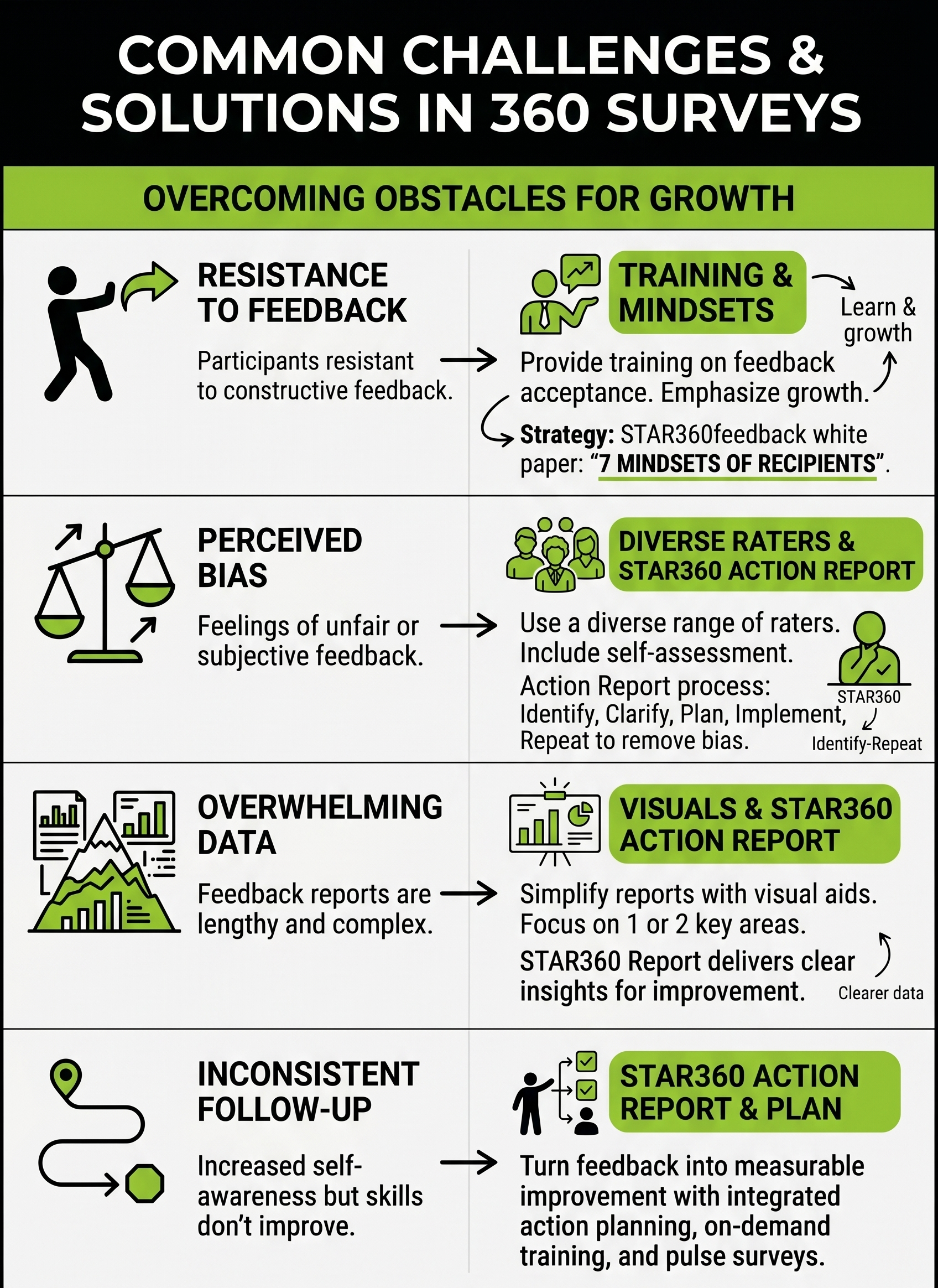
Resistance to Feedback: Participants may be resistant to the feedback they receive, especially if it is negative. Solution: Provide training on how to accept and act on feedback, emphasizing that it is an opportunity for growth. STAR360feedback has an excellent white paper, “7 Mindsets of 360 Feedback Recipients” that provides practical strategies for overcoming resistance.
Perceived Bias: Some may feel that certain feedback is biased or unfair. Solution: Encourage a diverse range of raters to minimize bias and include self-assessment to compare perceptions. The STAR360feedback Action report includes the Identify, Clarify, Plan, Implement, and Repeat process that helps the participants identify bias and remove it as a barrier.
Overwhelming Data: Feedback reports can be lengthy and complex. Solution: Simplify reports with visual aids and highlight key areas to focus on. Help participants prioritize one or two improvement areas at a time. The STAR360feedback Action report simplifies the data, delivers clear insights, and makes it easy for participants to use their data to improve.
Inconsistent Follow-Up: Without proper follow-up, 360 surveys can increase selfawareness without helping to improve skills. The STAR360feedback Action Report includes integrated action planning, ondemand training, and pulse surveys that help leaders turn feedback into measurable improvement.
Conclusion
With decades of experience in the field, STAR360feedback has helped countless organizations successfully implement 360-degree feedback surveys to drive growth and improvement. Our experts are equipped to guide you through every step of the process, from planning and execution to interpreting results and addressing challenges. Whether you’re navigating issues like resistance to feedback, perceived bias, or overwhelming data, STAR360feedback provides the tools, resources, and support needed to ensure your 360 survey program is a success. Our unique action-oriented approach focuses on providing clear insights and practical strategies to help participants improve continuously. By simplifying complex data, delivering follow-up resources, and fostering a culture of development, we empower organizations to achieve meaningful, lasting change. Let STAR360feedback help you navigate your path to leadership excellence and organizational growth. Contact us today to learn more about how our tailored solutions can meet your needs and drive real impact.